
Aviation teardown teams still spend too much time in spreadsheets before they know whether a deal is worth chasing.
This video demo shows a different operating model.
Built in 48 hours on Palantir Foundry, the app moves from aircraft structure to part-level economics, harvest lists, cashflow scenarios, and full pipeline prioritization in one connected flow.
What the demo actually walks through
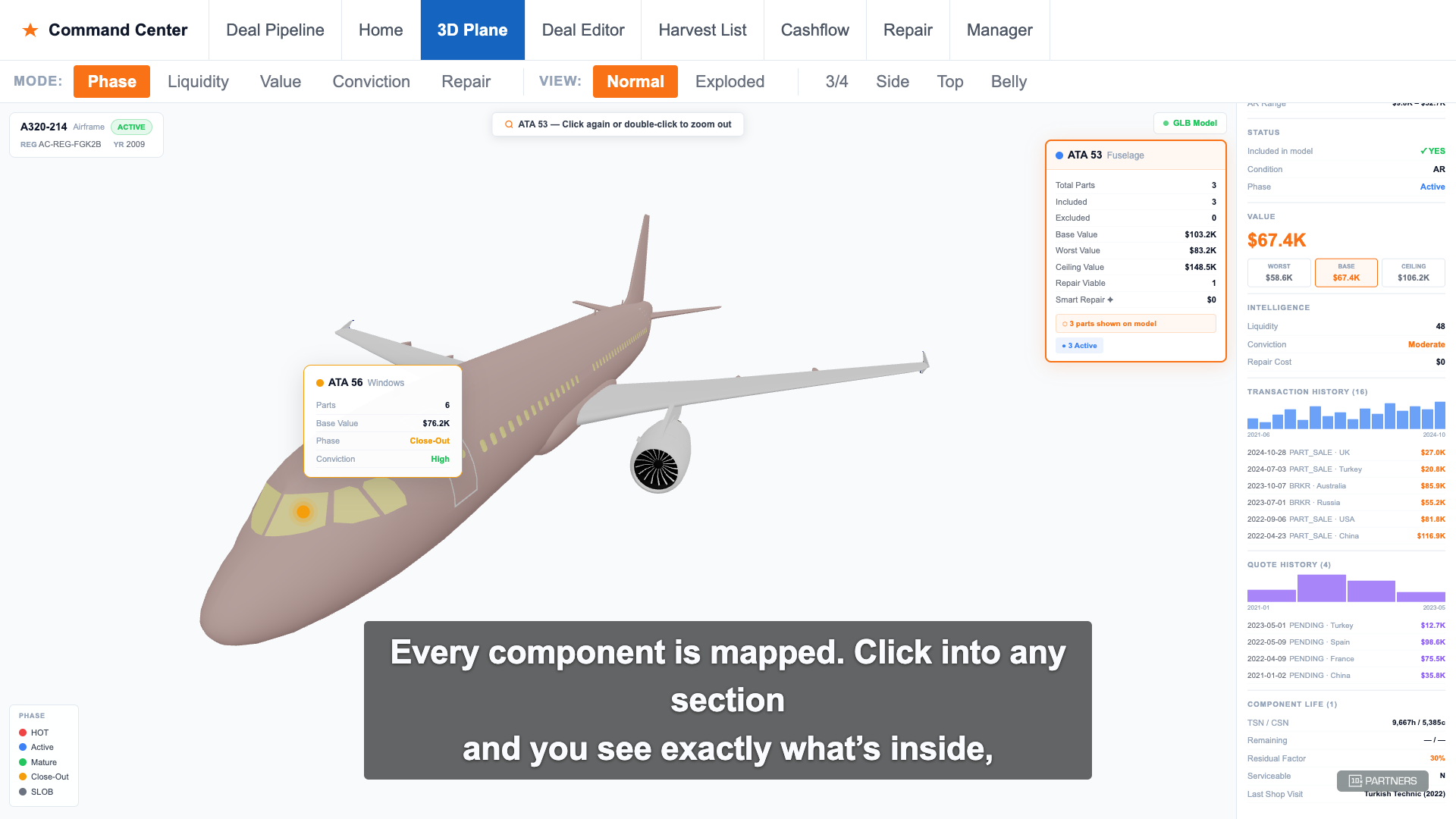
The first move is structural: start from the aircraft itself.
Instead of reading a teardown memo and then cross-checking disconnected tabs, the team can click into ATA zones, inspect the components inside, and see value, condition, repair cost, and liquidity context in the same view.
That matters because teardown economics are rarely decided by one headline number. They depend on what is on the aircraft, what is serviceable, what is worth repairing, and what can realistically move in market time.
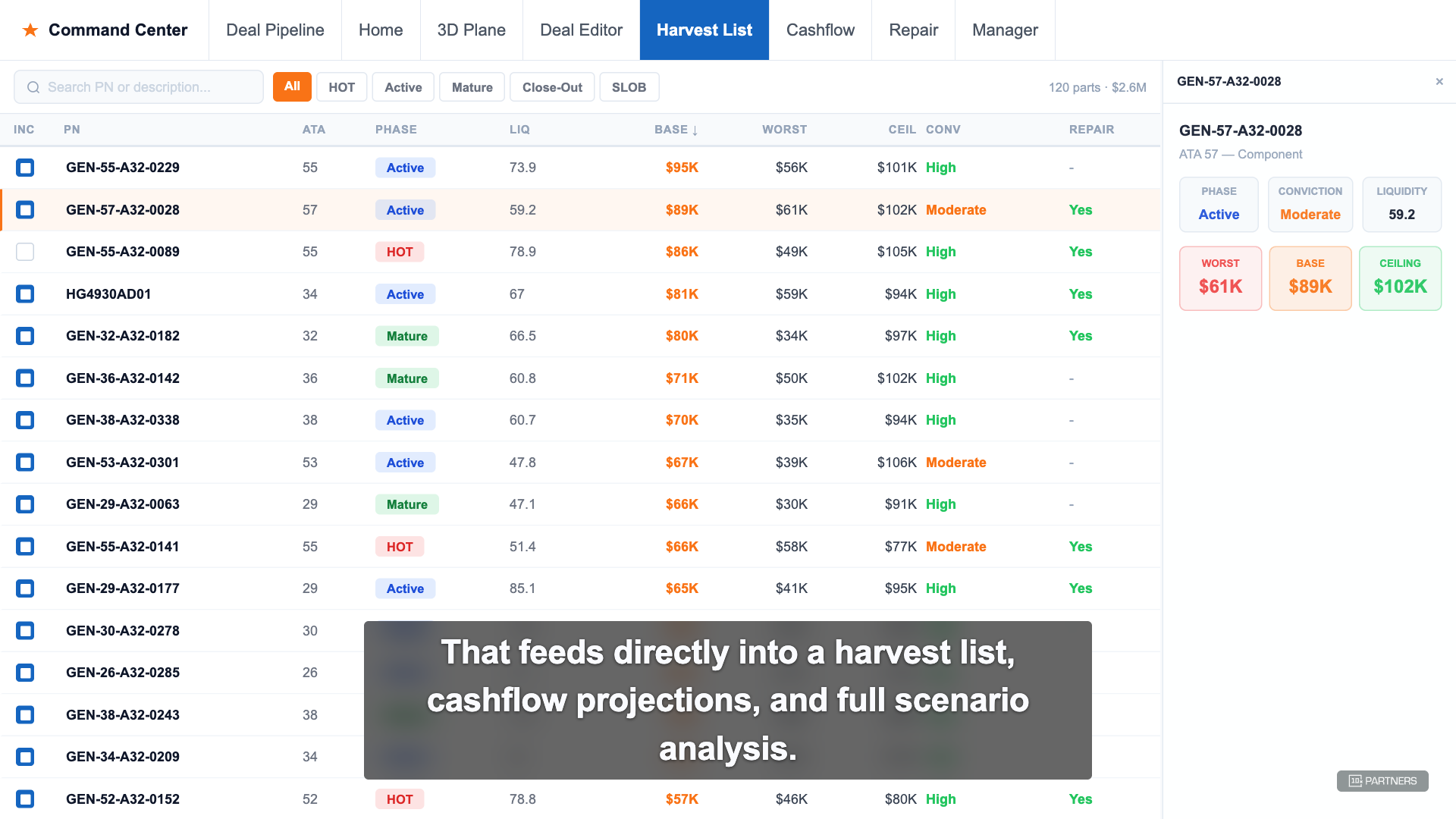
The second move is financial: that component logic flows straight into the harvest list and scenario layer.
In the demo, worst, base, and ceiling cases update live. Teams can see where value is concentrated, which assumptions are doing the work, and how a change in recovery or repair economics moves the deal.
Why it matters
The usual bottleneck is not lack of expertise. It is the time spent rebuilding the model every time the assumptions move.
By the time the workbook is clean enough to trust, the opportunity may already have shifted.
This is what the demo is meant to prove: a teardown team can move from structure to economics to prioritization without breaking the chain between the asset and the decision.
Final thought
When the aircraft view, the harvest list, the cashflow logic, and the pipeline stay connected, teams can spend less time stitching the analysis together and more time deciding whether to pursue, price, or pass.
Remi Barbier